2880 Acton Road,


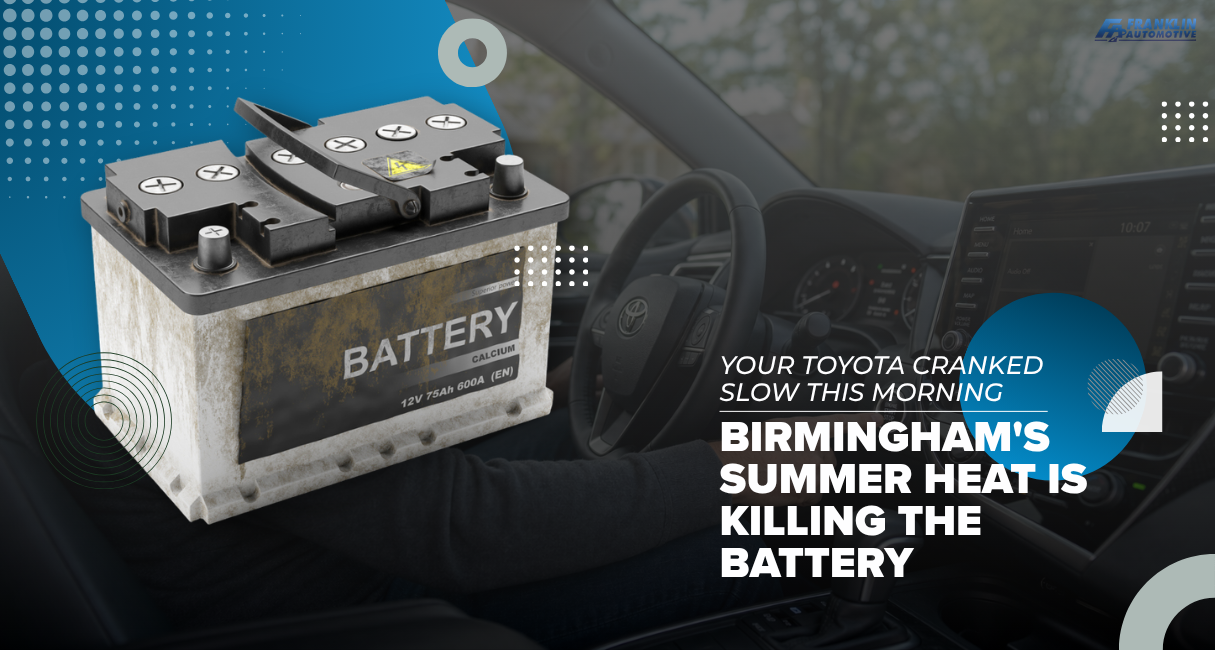
Your Toyota Cranked Slow This Morning — Birmingham’s Summer Heat Is Killing the Battery
Most people brace for a dead battery in January. In Birmingham, the real killer is July. Alabama‘s brutal summer heat cooks a battery from the inside, and a Toyota or Lexus that started fine all winter can crank slow — or not at all — on the hottest week of the year.
Heat evaporates the fluid inside the battery and corrodes the plates that store the charge, so the damage builds quietly until the morning it leaves you stuck in the driveway. The good news: a failing battery gives clear warning signs, and a quick test catches it early. Don’t wait for the click before you check it.
Quick Summary: Key Takeaways
- Heat beats cold: Summer heat, not winter, does the most damage to a car battery in the South.
- Fluid loss is the mechanism: Alabama heat evaporates the electrolyte and corrodes the internal plates.
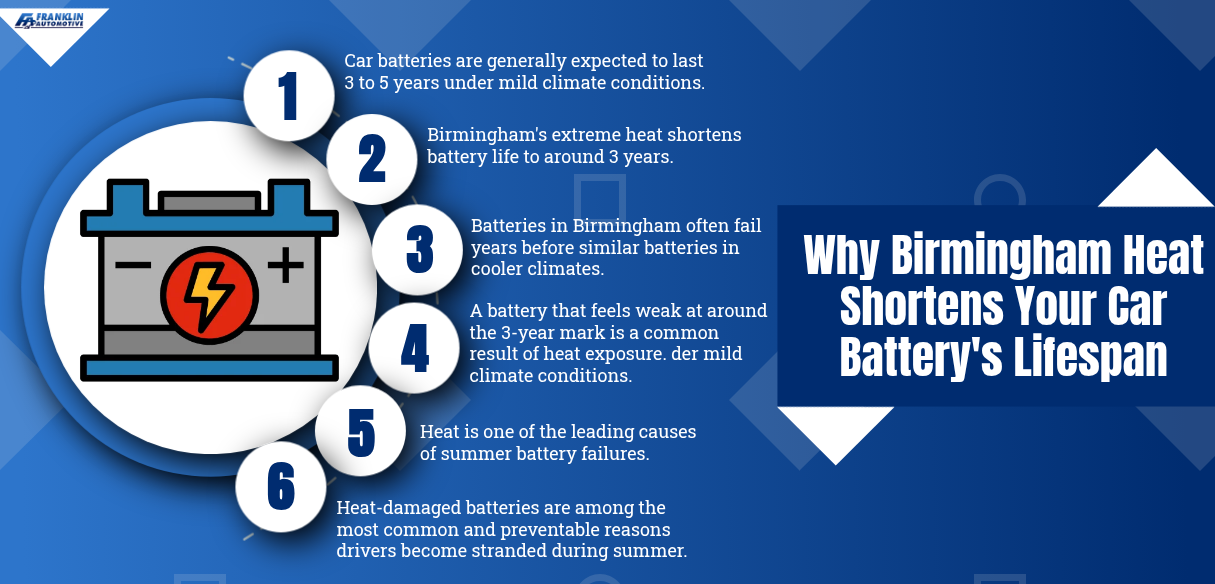
- Southern batteries die young: A battery rated for 3 to 5 years often lasts closer to 3 in Birmingham’s climate.
- Slow cranking is the tell: Sluggish starts, dash flicker, or a clicking start point to a weak battery.
- Hybrids have two batteries: A Lexus or Prius hybrid also runs a 12-volt battery that heat kills the same way.
In the South, Summer Heat Kills More Batteries Than Winter Cold
It’s counterintuitive, but true. Cold makes a weak battery reveal itself; heat is what makes it weak in the first place. High underhood temperatures speed up the chemical reactions inside the battery and quietly drive the corrosion and fluid loss that shorten its life through every long, hot Birmingham month. The wear piles up fast.
That’s why so many no-start calls land in July and August, not January. The battery didn’t fail overnight. The heat had been degrading it for weeks.
Heat Evaporates the Fluid and Corrodes the Plates Inside
Here’s what’s actually happening. A battery stores charge in lead plates bathed in an electrolyte fluid, and Alabama heat boils that fluid away faster than the battery can tolerate. As the level drops, the plates corrode and lose the surface area they need to hold a charge.
Once that internal damage is done, no amount of charging brings it fully back. The battery still works until the demand of a hot-morning start finally exceeds what’s left. Heat is patient, then sudden.
Southern Batteries Wear Out Years Before the Sticker Says
A car battery is generally good for 3 to 5 years, but that range assumes a mild climate. In Birmingham heat, plan on the shorter end — many batteries here are cooked and done around the 3-year mark, years before a battery in a cooler state would even feel tired. Yours feeling lazy at that age? No coincidence.
Heat is also a top reason drivers get stranded in the season. AAA expected to rescue 7.7 million drivers over the summer of 2025, and a heat-killed battery is one of the most common and most preventable reasons behind those calls.
Toyota and Lexus Hybrids Have a Second Battery to Worry About
Hybrids add a wrinkle. A Lexus or Toyota hybrid runs the big high-voltage pack you’d expect, but it also relies on a smaller 12-volt battery to wake the car’s computers and boot the system. Summer heat kills that 12-volt battery just like any other, and when it goes, the whole hybrid won’t start.
Owners get blindsided. The car feels perfectly fine right up until the morning it won’t wake up at all, because that small 12-volt battery finally gave out overnight in the heat. If your hybrid is a few summers old, that little battery deserves a test too.
How We Catch a Dying Battery Before It Strands You
A real battery test takes minutes. It also tells you the truth: we put the battery under a load and read its actual cold-cranking amps against the factory spec, check the charging system so a bad alternator doesn’t cook the new battery too, and clean up any corrosion sitting on the terminals. No guessing, no upsell.
We’ve kept Birmingham’s Toyotas, Lexus, and other imports running since 1992. Owners from Hoover, Vestavia, and Mountain Brook bring us their cars for straight answers. If yours cranked slow this week, come get it tested before the heat finishes the job.

Frequently Asked Questions
Q: Why do car batteries die in the summer heat?
A: Heat speeds up the chemistry inside a battery and evaporates the electrolyte fluid, corroding the internal plates that hold a charge. That damage builds over weeks of hot weather until the battery can no longer deliver enough power to start the car, which is why so many failures happen in July and August.
Q: How long does a car battery last in Alabama?
A: A battery is typically rated for 3 to 5 years, but Birmingham’s long, hot summers push most toward the shorter end — often around 3 years. If your battery is that old and starting feels sluggish, it’s smart to have it load-tested before it leaves you stranded.
Q: What are the signs my Toyota or Lexus battery is failing?
A: Slow or labored cranking, dashboard lights that flicker or dim when you start, a clicking sound instead of a start, or needing a jump are all warning signs. A load test confirms whether the battery is weak, and it’s far better to catch it early than after a no-start.
Q: Do hybrid cars have a battery that fails in heat?
A: Yes. Beyond the large high-voltage pack, a Lexus or Toyota hybrid uses a 12-volt battery to power up the computers and start the system, and summer heat kills it the same way it kills any battery. When that 12-volt battery fails, the hybrid won’t start even if the main pack is fine.
Get Your Battery Tested Before the Next Hot Morning
Slow start or a battery a few summers old? A quick load test now beats a jump-start in a parking lot.
Franklin Automotive — 2880 Acton Rd, Birmingham, AL 35243
Hours: Monday–Friday 7:00 AM – 5:30 PM; Saturday–Sunday closed
Website: franklinautomotive.com